Options for Replacing One Tooth or a Full Arch

Dental Implants
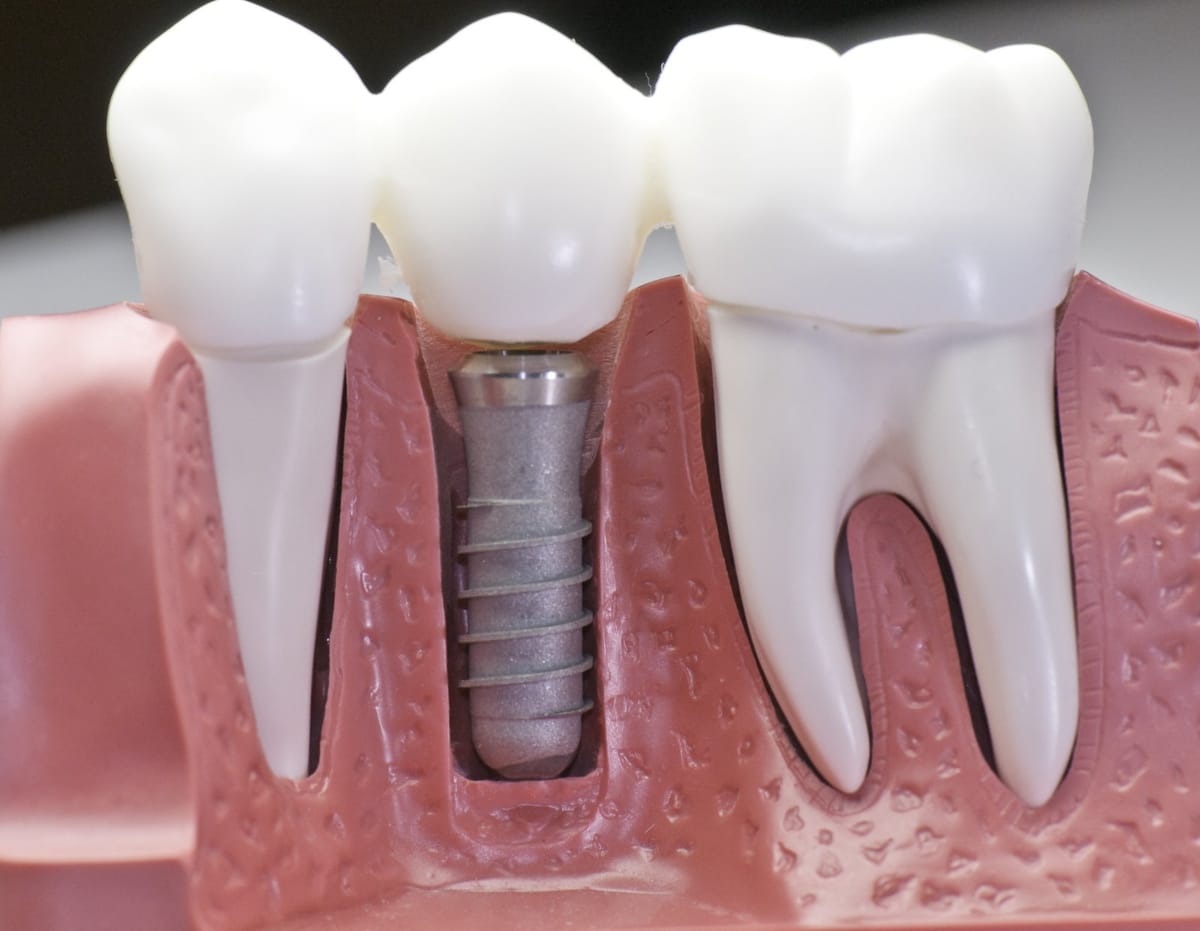
An implant is a titanium post placed in the jawbone that acts as an artificial tooth root, later restored with a crown. It does not rely on neighboring teeth for support and helps maintain bone at the site. Treatment happens in stages over several months while the implant integrates.
Bone Grafting and Site Preparation
If bone has already been lost at the site, grafting may be needed before an implant can be placed. Whether you need it, and how long healing takes, is determined by imaging and examination.
Fixed Bridges
A bridge fills a gap by anchoring to the adjacent teeth. It is completed in weeks rather than months and does not require surgery, but it does involve preparing the neighboring teeth.
Full Dentures
A full denture replaces all teeth in an arch. Fit and comfort improve over an adjustment period, and periodic relines keep the fit accurate as the ridge changes shape.
Partial Dentures
A partial replaces several missing teeth in an arch while your remaining natural teeth stay in place. It is removable and generally the most affordable way to restore multiple teeth at once.
Implant-Supported Options
Implants can also be used to stabilize a denture, which reduces movement while eating and speaking. Candidacy depends on bone volume and overall health, and complex cases may involve a surgical specialist.
How the decision is actually made
A planning visit includes an examination, X-rays, a review of your medical history and medications, and a discussion of what each option costs and how long it takes. You leave with a written plan rather than a verbal quote.
A note on advertised pricing
Denture and implant pricing varies widely with materials, the number of teeth involved, and whether preparatory work is needed. We will not quote a figure before an examination — any number given sight-unseen is not a real estimate.
Common Questions
How long does an implant take from start to finish?
Am I too old for implants?
Will insurance cover tooth replacement?
Can I get a denture the same day a tooth is removed?
This page is provided for general educational purposes and does not replace an in-person dental examination or personalized advice.
Ready to Talk Through Your Options?
A planning visit gives you a written comparison of what is realistic for your mouth and your budget.
Book an AppointmentHow much do you want to know?
Same subject, three depths — about implants, our most-asked replacement. Pick what suits you today.
An implant replaces a missing tooth with a small titanium post that acts as a root, topped with a crown that looks and works like a natural tooth. It does not touch the neighboring teeth. Whether it fits your situation takes one exam and an X-ray.
Book that exam →The stages: a consultation with imaging → placement of the post (a smaller procedure than most people expect) → a healing period of a few months while bone integrates with the post → the final crown. Most of the timeline is healing, not chair time.
Alternatives worth weighing: a bridge (faster, but reshapes the neighboring teeth), a partial denture (least invasive, removable), or doing nothing — each with written trade-offs at your consult.
Maintenance: an implant is cleaned like a natural tooth and checked at ordinary visits. The crown on top can be replaced separately if it ever needs it.
Cost: highest upfront of the options, often lowest per year of service. Your written quote comes after the exam — never from a website.
Candidacy is anatomical first. The deciding factors are bone volume and density at the site, sinus and nerve proximity, gum health, and healing capacity — which is why no honest answer exists before imaging. Smoking and uncontrolled diabetes materially affect integration.
Integration is biology, not hardware. The post becomes stable because bone grows onto its surface over weeks to months. Loading it too early is how implants fail; the healing period is the treatment, not a delay.
The restoration is modular. Post, abutment, and crown are separate parts — a worn crown can be renewed years later without disturbing the integrated post. Bite forces and grinding habits shape the material choice.
When grafting comes up: if bone has resorbed since the tooth was lost — common after years with a gap — a graft may rebuild the site first. Complex surgical cases are referred same-day to trusted local specialists; the restoration still happens here.
What we know / what requires an exam
A page can educate you about replacing a missing tooth — it cannot examine you. Here is the honest line between the two.